Ensuring patients continuous access to affordable medicines is a central issue for Europe’s resilience. The pandemic, geopolitical instability and repeated shortages have shown the need to move from reactive crisis management to structural resilience, able to anticipate vulnerabilities across the entire healthcare supply chain.
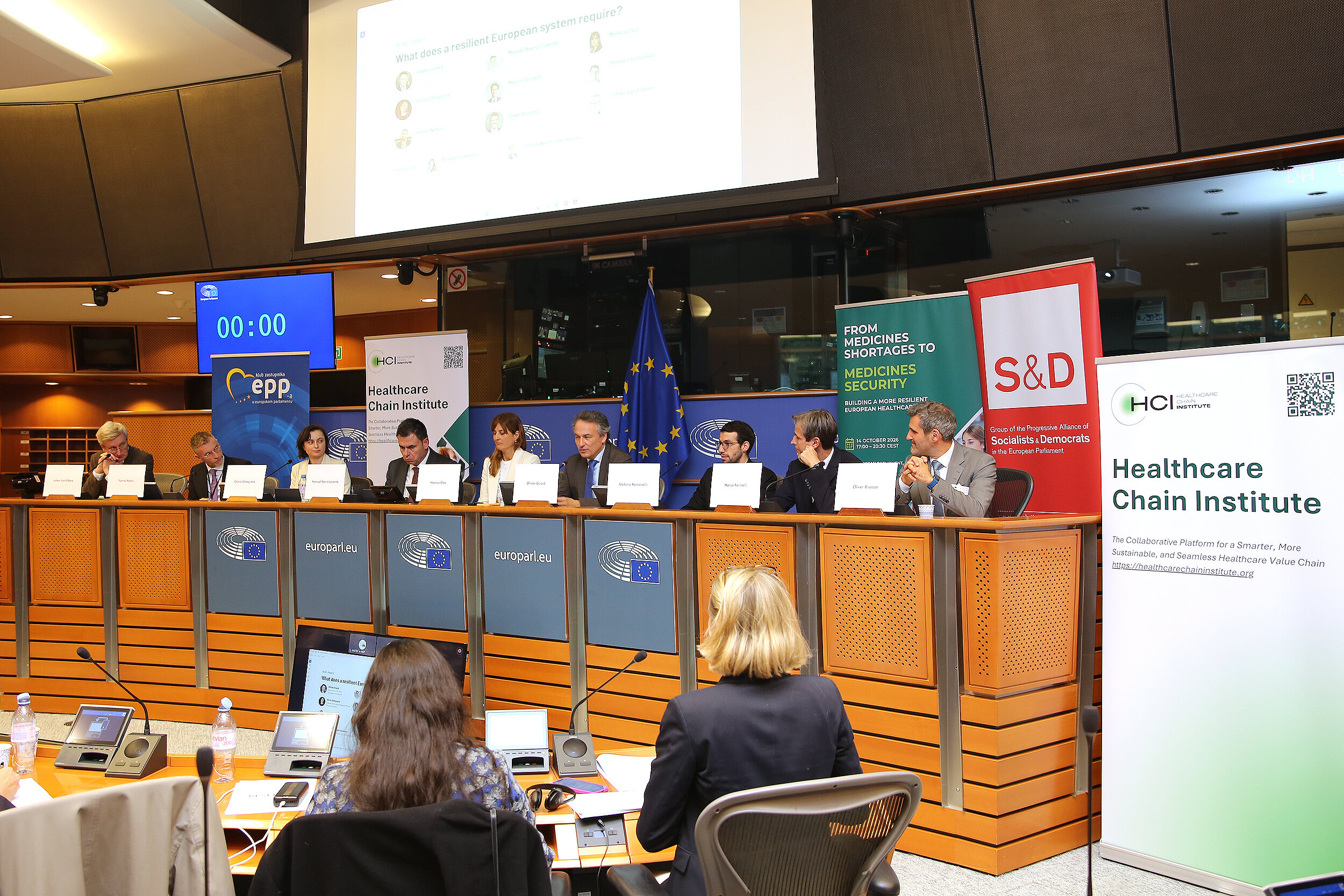
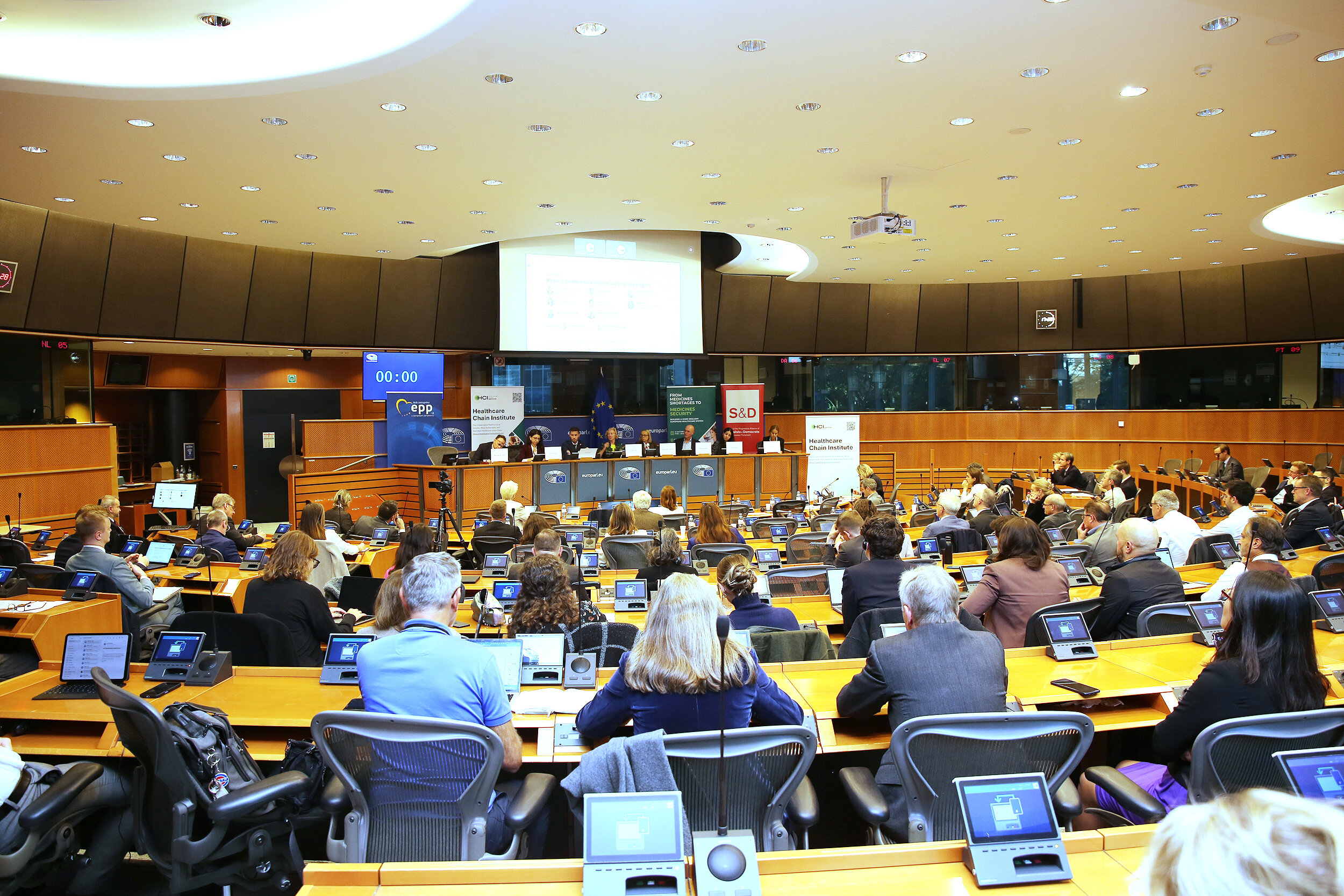
This ambition guided the dialogue “From Medicines Shortages to Medicines Security”, organised by the Healthcare Chain Institute (HCI) on 14 October 2026 at the European Parliament, hosted by MEPs Tomislav Sokol and Vytenis Andriukaitis, with the support of EFPIA and in cooperation with SME Connect. The exchange brought together over 150 participants from all segments of the European healthcare supply chain, including European and national institutions, regulatory authorities, the pharmaceutical and medical device industries, distributors, healthcare professionals, hospitals, patient representatives and health system payers. The aim was to examine existing weaknesses and the conditions needed to build a more resilient European system.
During the exchange, participants acknowledged the progress made thanks to cooperation between national authorities and the European Medicines Agency (EMA), which has strengthened the ability to detect and manage shortages. However, persistent economic and operational weaknesses emerged, linked to production concentration and dependence on a limited number of suppliers. Prices and tender conditions can also undermine the economic sustainability of producing certain essential medicines. Many plants producing older-generation critical medicines require investment to meet quality and environmental standards and to support digitalisation. As highlighted during the discussion, better emergency management alone is not sufficient to remove these structural vulnerabilities.
The consequences affect day-to-day care. Doctors and pharmacists must find alternatives, revise prescriptions and explain changes to patients. For those living with complex or rare conditions, a shortage can translate into anxiety, changes to or interruptions of therapies. The dialogue therefore stressed the need to place continuity of care at the centre of choosing interventions.
The Critical Medicines Act was discussed as a tool to give greater weight to security of supply in purchasing policies and tenders. The exchange showed that supporting European manufacturing capacity requires adequate funding and consistent incentives, together with supply diversification and reliable international partnerships. Representatives of payer organisations highlighted how continuous downward pressure on prices can undermine the market’s economic sustainability and lead suppliers to withdraw, while also noting that higher prices do not automatically guarantee greater resilience. Additional investments should therefore be linked to demonstrable improvements in security of supply and patient outcomes.
Emergency stocks (contingency stocks), intended to support continuity of supply in case of supply disruptions, were also examined in depth. Participants stressed that they must be proportionate to risks and coordinated at European level. Increasing stocks does not equal increasing overall availability: uncoordinated national obligations can divert medicines from neighbouring markets. Responses must therefore reflect the characteristics of individual products, markets and clinical needs. Medicines with multiple manufacturers, hospital products with a single supplier, therapies for rare diseases and advanced therapies present different vulnerabilities and require targeted measures.
The exchange also explored operational coordination between the Critical Medicines Act, the new pharmaceutical legislation, EMA tools for shortage management and the crisis preparedness capacities of the Health Emergency Preparedness and Response Authority (HERA), the European Commission authority responsible for preparedness and response to health emergencies. Interoperability, shared definitions, reliable data and clear accountability were identified as key elements to enable timely action. Linking European monitoring to prescribing and dispensing systems can help doctors and pharmacists act on available alternatives. The value of information lies in the decisions and preventive actions it makes possible.
From the different perspectives that emerged during the dialogue, one common need became clear: making these tools work together. Based on the discussion, HCI identifies five priorities to strengthen the resilience of the healthcare supply chain: understand vulnerabilities, choose proportionate measures, connect the different actors in the healthcare supply chain, align funding, responsibilities and incentives, and measure results. This means building a shared operating model, assessed through patient access, equity between markets and the ability to detect and resolve disruptions. Continuity of access to medicines remains the ultimate measure of success.
Giorgia Calvaresi, Healthcare Chain Institute (HCI)
Website: https://healthcarechaininstitute.org/
Contact: info@healthcarechaininstitute.org